
QCI #039 - Brazil's Economic Independence on Display
Let's Talk Economics!
Part II of II Part Series:
Link to Part I: https://www.quantcompass.io/qci-031-the-most-strategic-geo-political-relationship-in-the-americas/
Let me prefix the US-Brazil Trade negotiations with the following: On November 16, 2020, Pix, an instant payment system available 24/7 that settles direct bank-to-bank transactions instantly up to a rare maximum of 10 minutes, was launched by the Central Bank of Brazil (BCB), replacing VISA and Mastercard. Pix is currently the dominant payment processor in Brazil, with 175 million users: 160 million individual users and 15 million business users. 93% of the adult population in Brazil uses Pix.
In Q1 2023, Brazil, China, and Saudi Arabia reached a deal to trade in their own currencies, ditching the US Dollar. If countries transact in currencies other than the Dollar, the US cannot sanction them. Giving the BRICS nations economic independence from the US and trade leverage as members of the Trade Bloc.
The Political context of the 50% Tariffs on Brazilian imports was initially linked by the Trump administration to the prosecution and conviction of former Brazilian President Jair Bolsonaro, a Trump ally, in a trial directly before the Supreme Court, without going through the lower courts first, which is how former President Bolsonaro can get out of this situation in the future.
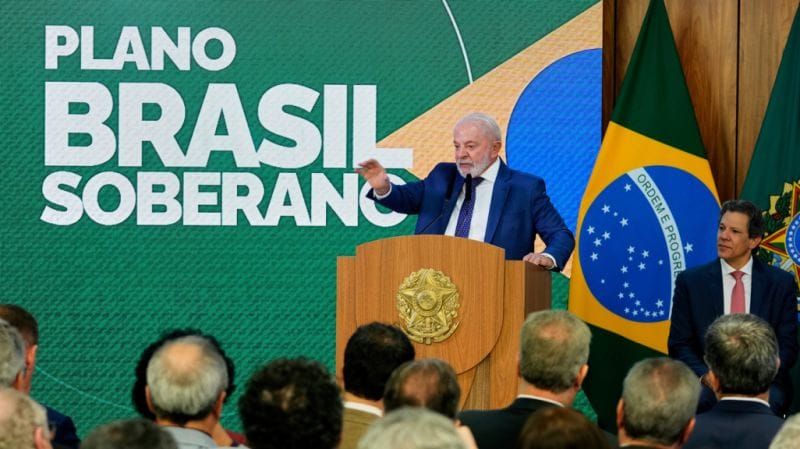
The outcome of the recent US-Brazil negotiations is that the United States, under President Trump, has agreed to remove significant tariffs on certain Brazilian agricultural products, including beef, coffee, and fruit. This decision follows multiple rounds of negotiations with Brazilian President Lula da Silva, who pursued a strategy that combined "defiance with patience" and argued that the US trade deficit with Brazil was based on "mistaken information".
President Trump signed an executive order this month, November 2025, that removed the previously high tariffs on key Brazilian agricultural exports. The White House cited progress in negotiations and efforts to lower consumer costs for Americans as reasons for the rollback.
By lifting the tariffs without significant concessions, Lula is seen as having gained a political advantage domestically, with his approval ratings improving after the tariff announcements.
The outcome has been described as a "reset" in US-Brazil relations, allowing the two largest economies in the Americas to improve cooperation despite ideological differences between the two Presidents.
Member discussion